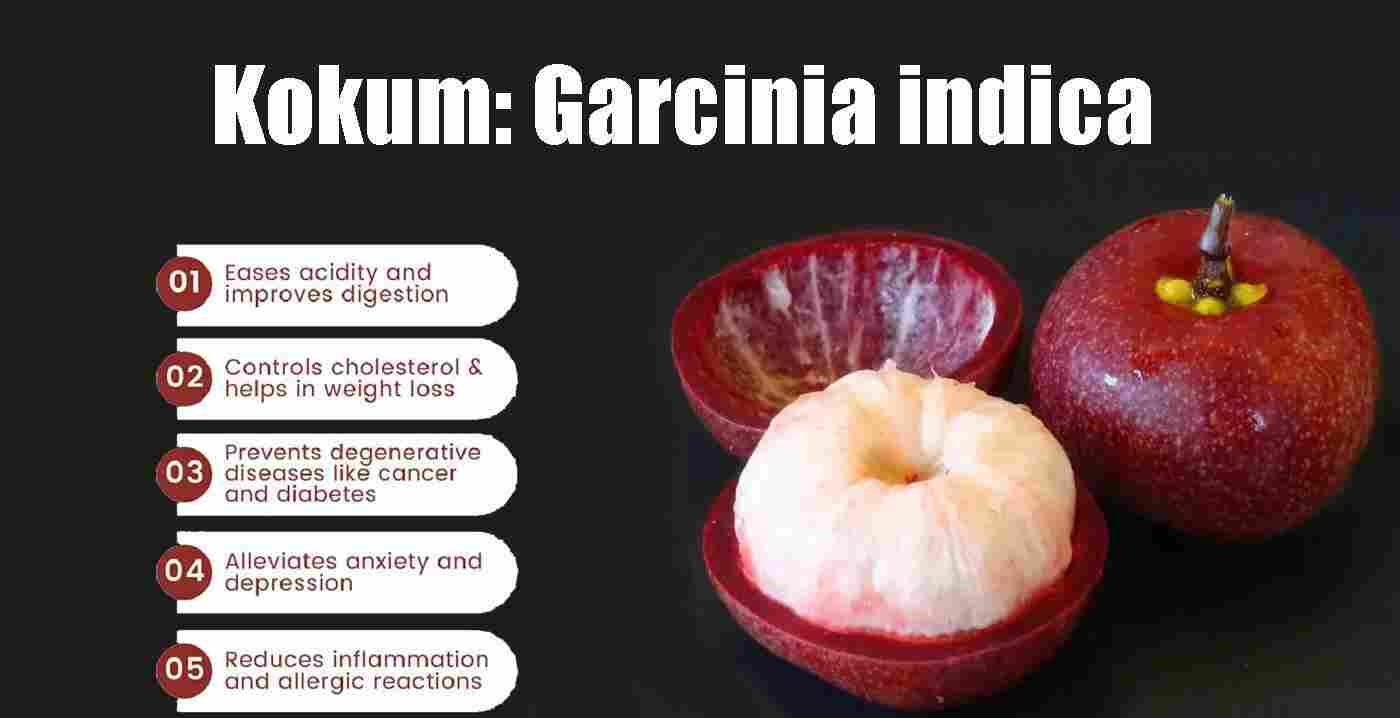
Kokum, also called the “Kokam Butter Tree,” is a fruit-bearing tree whose fruits, peels, and seeds are packed with health benefits. The dried peel of the fruit is commonly used to add flavor to curries.
Kokum aids in weight loss by reducing the production of fatty acids and increasing serotonin secretion, which helps suppress appetite.
Kokum can help manage gastric ulcers thanks to its anti-inflammatory and antimicrobial properties.
Drinking Kokum juice can expel heat, reduce acidity, and relieve sunstroke.
Kokum juice also helps control blood sugar levels by increasing insulin secretion due to its anti-diabetic and antioxidant properties.
Kokum oil is beneficial for the skin because its antioxidant properties help reduce wrinkles and delay signs of aging. It can also be used to manage skin allergies and burns.
Kokum is also known as Garcinia indica, कोकम, अमसुल, Kokam Butter Tree, Birondd, Birondi, Kokummara, Dhupadamara, Kokan, Murgalmera, Murgal, Ratamba, Amsole, Amasul, Punampuli, Brindonia tallow tree, Mangosteen oil tree, and Wild mangosteen. Kokum is a plant-based product, sourced from the Kokum tree.
What is Kokum: Garcinia indica: Kokam?
Kokam, also called Garcinia indica, is a tree native to India. It goes by various names across the country: Goa butter tree or Kokam butter tree in English, Bheranda in Marathi, Vrikshamla in Sanskrit, Punarpuli in Tulu, and Murgal-masala in Tamil. It primarily grows along the Western coasts of India but is also found in the Eastern and North-Eastern regions.
Kokam is widely used in cooking. Its tangy flavor makes it perfect for curries, especially for pickling fish, a process known as Colombo curing. Kokam is also a popular ingredient for making refreshing drinks and various cosmetics, thanks to its unique properties and benefits.
Beyond its culinary and commercial applications, Kokam holds a significant place in traditional medicine. It is highly valued for its potential health benefits and is extensively used in various natural remedies. Its versatile uses have made it an integral part of holistic healing practices.
How to Use Kokum
Kokum Butter
To use Kokum butter, start by melting 1/4 to 1/2 teaspoon of it, or adjust the amount to suit your needs. Mix it with some almond oil and apply this mixture to the affected area once or twice daily. This remedy is helpful for managing urticaria symptoms and speeding up the healing of wounds.
Kokum Fruit Paste
For a soothing skin treatment, take 1-2 Kokum fruits, or as needed, and blend them into a paste. Add a little rose water to the paste for a smooth application. Apply this mixture to your skin once a day to help control itching caused by skin allergies.
Kokum Syrup
Kokum syrup is another beneficial way to use this fruit. Take 1-2 teaspoons of Kokum syrup and mix it with an equal amount of water. Drink this mixture once or twice a day after meals. This helps in enhancing digestion and overall health.
Kokum Juice
For a refreshing and healthy drink, take 1/2 to 1 cup of Kokum juice. Mix the juice with an equal amount of water and drink it on an empty stomach once a day. If you prefer a sweeter taste, you can add some jaggery to the juice. This drink is not only tasty but also good for your digestion and overall well-being.
Nutritional Value of Garcinia Indica
Garcinia indica, also known as kokam, is a fruit with a rich nutritional profile. Each component offers various health benefits, making it a valuable addition to diets.
Key Nutrients
Proteins and Fats
a) Garcinia indica contains 1.92% protein, essential for body repair and growth.
b) It has 10% crude fat, providing energy and supporting cell function.
Fiber and Carbohydrates
a) The fruit has 14.28% crude fiber, aiding digestion and promoting a healthy gut.
b) With 35% carbohydrates, it serves as a significant energy source.
c) It contains 1% starch, a simpler carbohydrate.
Essential Compounds
a) Garcinia indica includes 2.4% pigments, which may have antioxidant properties.
b) It contains 2.85% tannins, known for their potential antioxidant and anti-inflammatory effects.
c) The fruit has 5.71% pectin, a type of fiber that can help lower cholesterol and improve blood sugar levels.
Vitamins and Acids
a) It provides 0.06% ascorbic acid (Vitamin C), crucial for immune function and skin health.
b) Notably, Garcinia indica has 22.8% hydroxyl citric acid, which is often linked to weight management and metabolic health.
Consuming Garcinia indica can contribute to overall well-being by providing essential nutrients and supporting various bodily functions. Its rich fiber content aids digestion, while the presence of antioxidants helps protect against cellular damage. The high level of hydroxyl citric acid may support weight management efforts, making Garcinia indica a beneficial addition to a balanced diet.
Benefits of Kokum
Wound Healing
Kokum speeds up wound healing, reduces swelling, and helps skin return to its normal texture. Its butter, when applied to wounds, promotes rapid healing and decreases inflammation. To use it, melt 1/4 to 1/2 teaspoon of Kokum butter, mix it with almond oil, and apply to the affected area once or twice daily for quick results.
Cracked Heels
Cracked heels, often caused by dryness, can be soothed with Kokum butter. This natural remedy restores moisture, heals the cracks, and alleviates pain. To treat cracked heels, melt 1/4 to 1/2 teaspoon of Kokum butter, mix it with beeswax, and apply to the affected area once or twice a day for quick healing.
Urticaria
Urticaria, or hives, is an allergic reaction that can cause red, itchy welts. Kokum can help manage the symptoms of urticaria by balancing the body’s elements and providing relief. Melt 1/4 to 1/2 teaspoon of Kokum butter, mix it with almond oil, and apply to the affected area once or twice daily to ease symptoms.
Indigestion
Indigestion occurs when the digestive process is incomplete, often due to weak digestive fire. Kokum can improve digestion by enhancing the digestive fire, making it easier to process food. To use Kokum for indigestion, mix 1/2 to 1 cup of Kokum juice with an equal amount of water and drink it on an empty stomach once a day until you feel better.
Inflammatory Bowel Disease
Kokum can help manage symptoms of inflammatory bowel disease (IBD) by improving digestive fire and reducing inflammation. To use Kokum for IBD, mix 1/2 to 1 cup of Kokum juice with an equal amount of water and drink it on an empty stomach once a day. Repeat daily to control symptoms.
Diarrhea
Diarrhea can be caused by various factors, including improper diet, impure water, toxins, and stress. Kokum helps control diarrhea by thickening loose stools and reducing the frequency of bowel movements. To use Kokum for diarrhea, mix 1/2 to 1 cup of Kokum juice with an equal amount of water and drink it on an empty stomach once a day until the symptoms subside.
Properties of Kokam
Kokam, a fruit celebrated since ancient times, offers a range of health benefits.
Firstly, it may help reduce acidity in the stomach, acting as a natural antacid. This can make digestion smoother and prevent discomfort after meals. Additionally, kokam might be good for heart health, potentially supporting overall cardiovascular function and well-being.
Furthermore, kokam may protect the liver from diseases, acting as a guardian of this vital organ. It could also serve as a pain reliever, helping to ease various aches and discomforts. Its potential anti-inflammatory properties might reduce swelling, offering relief from conditions that cause inflammation.
Kokam might be helpful for the skin too, possibly aiding in the treatment of allergic rashes with its anti-dermatitis qualities. It might even help reduce excessive sweating, acting as a natural anti-perspirant. Lastly, kokam could be an astringent, tightening and toning tissues, and a demulcent, soothing irritation in the mouth and mucous membranes.
In essence, kokam is a versatile fruit that might provide numerous health benefits, making it a valuable addition to natural remedies.
Precautions of Using Kokum
Breastfeeding
When it comes to breastfeeding, there isn’t enough information about the safety of using Kokum. Because of this, it’s best to avoid using Kokum or to use it only if your doctor says it’s okay. This ensures that both the mother and baby remain safe.
Pregnancy
Similarly, there isn’t enough information about the safety of Kokum during pregnancy. Pregnant women should avoid using Kokum or only use it if advised by a healthcare professional. This precaution helps to protect both the mother and the developing baby.
Always consult with a doctor before using Kokum during these sensitive periods to ensure the well-being of both mother and child.
Summarizing The Benefits Of Garcinia Indica (Kokam)
1. Natural Antacid: Kokam may help reduce stomach acidity, improving digestion.
2. Heart Health: It could support cardiovascular health by enhancing heart function.
3. Liver Protection: Kokam may safeguard the liver from various diseases.
4. Pain Relief: It might act as a natural analgesic, relieving pain.
5. Anti-Inflammatory: Its properties may help reduce inflammation and swelling.
6. Skin Health: Kokam could assist in treating allergic skin rashes.
7. Reduces Sweating: It might work as an anti-perspirant, reducing excessive sweating.


8. Astringent: Kokam may tighten and tone tissues.
9. Soothes Irritation: It could act as a demulcent, relieving irritation in the mouth and mucous membranes.
10. Weight Management: Kokam might aid in weight loss by reducing appetite and enhancing metabolism.
11. Antioxidant: It may help combat oxidative stress, protecting cells from damage.
12. Anti-Aging: Its antioxidant properties could slow down the aging process.
13. Digestive Health: Kokam might improve overall digestive function.
14. Immune Support: It could boost the immune system, helping to fight off infections.
15. Cholesterol Management: Kokam may help lower bad cholesterol levels.
16. Blood Sugar Control: It might aid in regulating blood sugar levels.
17. Improves Mood: Kokam could enhance mood and reduce anxiety.
18. Hydration: It may help maintain hydration levels in the body.
19. Anti-Bacterial: Kokam might have properties that help fight bacterial infections.
20. Anti-Fungal: It could help combat fungal infections.
21. Respiratory Health: Kokam may support respiratory function and alleviate symptoms of colds and coughs.
22. Urinary Health: It might assist in maintaining urinary tract health.
23. Reduces Muscle Soreness: Kokam could help reduce muscle pain and soreness.
24. Joint Health: It may support joint health and reduce symptoms of arthritis.
25. Enhances Energy: Kokam might boost energy levels and reduce fatigue.
26. Detoxification: It could help detoxify the body by promoting the elimination of toxins.
27. Enhances Skin Glow: Kokam may improve skin complexion and texture.
28. Hair Health: It might strengthen hair and reduce hair fall.
29. Bone Health: Kokam could support bone density and strength.
30. Wound Healing: It may aid in the faster healing of wounds and cuts.
Conclusion
Kokum, scientifically known as Garcinia indica, emerges as a powerhouse of health benefits with its versatile properties. From aiding digestion and promoting heart health to protecting the liver and soothing skin irritations, kokum offers a holistic approach to well-being. Its potential as a natural antacid, pain reliever, and anti-inflammatory agent underscores its therapeutic value in alleviating various health concerns.
Beyond its medicinal properties, kokum supports overall vitality by boosting immunity, managing cholesterol levels, and aiding in weight management. Its antioxidant and anti-aging effects contribute to cellular health, while its role in hydration and mood enhancement highlights its comprehensive impact on mental and physical wellness.
Incorporating kokum into daily routines not only supports health goals but also celebrates the rich tradition of natural remedies. As we continue to explore and harness its benefits, kokum stands as a testament to the profound synergy between nature’s gifts and human well-being, offering a path to a healthier and more balanced lifestyle.
Frequently Asked Questions About Kokum
Q: What is black Kokum?
A: Black Kokum is the dried rind of the Kokum fruit, which is dark purple or black. It has a sticky texture and curled edges. When used in cooking, it adds a sweet and sour flavor along with a pinkish-purple color to dishes.
Q: Where does Kokum butter come from?
A: Kokum butter is extracted and refined from the fruit of the Kokum tree. It’s commonly used in creams, lotions, soaps, body butter, and lip balms because it helps thicken these products.
Q: What does Kokum taste like?
A: Dried Kokum has a tangy taste, similar to tamarind. It provides a sweet-tangy flavor to dishes.
Q: What is the best time to drink Kokum juice?
A: Kokum juice is most popular during the hot summer months as a refreshing drink to prevent dehydration and sunstroke. However, it can be enjoyed in any season for its digestive benefits.
Q: How to prepare Kokum water at home?
A: To make Kokum water or juice at home:
1. Rinse 2-3 Kokum fruits, chop, and remove seeds.
2. Use the pulp and rind.
3. Grind the pulp with water.
4. Strain the mixture.
5. Add more water if needed.
6. Optionally, make sherbet by mixing in sugar syrup and cold water.
Q: Is Kokum good for cough?
A: While there isn’t enough scientific evidence to support Kokum’s role in treating cough, traditional uses suggest that the ripe fruit may help control cough and expel mucus due to its hot nature.
Q: Is Kokum good for weight loss?
A: Kokum may aid in weight loss by reducing fatty acid production, increasing serotonin levels to suppress appetite, and decreasing carbohydrate metabolism. Its properties make it useful for managing weight.
Q: Is Kokum good for Pitta nature?
A: Yes, Kokum is beneficial for those with a Pitta nature, which involves sensitivity to heat. Kokum juice or infused water helps reduce heat, acidity, and sunstroke symptoms, making it ideal for calming Pitta dosha.
Is Kokum Good for Diabetic Patients?
Q: Is Kokum good for diabetic patients?
A: Kokum has antioxidant and anti-diabetic properties. It helps restore enzyme levels affected by type 2 diabetes and aids in carbohydrate metabolism, making it useful for managing diabetes and its complications.
Q: Is Kokum good for acidity?
A: Yes, Kokum can help manage acidity due to its active compounds. It improves digestion and corrects the digestive fire, making it effective for acidity caused by indigestion.
Q: Does Kokum cause constipation?
A: No, Kokum does not cause constipation. In fact, it is traditionally used to manage various digestive problems, including constipation.
Q: Is Kokum bad for the liver?
A: No, Kokum is not harmful to the liver. It is rich in antioxidants and protects the liver by inhibiting lipid peroxidation.
Q: Does Kokum protect against gastric ulcers?
A: Yes, Kokum may protect against gastric ulcers. It contains garcinol, which has antioxidant properties and protects stomach cells from damage, helping to prevent ulcers.
Q: Does Kokum help ease anxiety and depression?
A: Yes, Kokum might help manage anxiety and depression by improving serotonin levels in the body, which enhances brain function and eases symptoms of these conditions.
Q: Is Kokum good for the heart?
A: Yes, Kokum might benefit heart health. It contains flavonoids that protect heart cells from damage caused by free radicals, improving overall heart health.
Q: What are the benefits of Kokum juice?
A: Kokum juice is a cool, refreshing drink that helps prevent dehydration and sunstroke. It also improves digestion and serves as a natural remedy for various stomach and liver disorders.
Q: Is Kokum good for the skin?
A: Yes, Kokum oil is beneficial for the skin. It is rich in antioxidants, reduces skin cell degeneration, restores elasticity, and can help manage rashes, burns, and chafed skin.
Q: Is Kokum butter good for hair?
A: There isn’t enough scientific evidence to support the benefits of Kokum butter for hair, but it is traditionally used to manage hair problems like hair fall, promoting hair growth due to its astringent properties.
Q: How can Kokum oil be used?
A: Kokum oil, also known as Kokum butter, has cosmetic and medicinal uses. It is used in cooking, skincare products, and as a base in ointments. It has moisturizing, soothing, and anti-inflammatory properties, making it ideal for face creams, lotions, and lipsticks
Referencehttps://easyayurveds.com/ayurvedic-medicine-for-diarrhea/
https://easyayurveds.com/herbal-medicine-easy-ayurveds-solution-for-health/ https://easyayurveds.com/ayurvedic-medicine-everything-you-need-to-know-about-it/ https://easyayurveds.com/ayurvedic-medicine-for-sexually-long-time/
https://easyayurveds.com/ayurvedic-medicine-for-fatty-lever-and-other-liver-problem/ https://easyayurveds.com/ayurvedic-medicine-for-immunity-boosting/
https://easyayurveds.com/ayurvedic-medicine-for-memory-power-brain-health/ https://easyayurveds.com/ayurvedic-medicine-for-prostate-problem/
https://easyayurveds.com/ayurvedic-medicine-for-low-sexual-interest-in-women/ https://easyayurveds.com/ayurvedic-medicine-for-sex-power/
https://easyayurveds.com/ayurvedic-treatment-for-hypertension-high-blood-pressure/ https://easyayurveds.com/ayurvedic-teatment-for-ulcer-in-stomach/
Medicinal Plants for skin Burns
Medicinal Plants for Hair Health
Medicinal Plants for Wound Healing
30 Medicinal Herbs For your Home
Medicinal Plants for Skin Beauty
50 Medicinal Plants for Inflammation
50 Medicinal Plants Used as Spices In Nepal
50 Medicinal Plants Commonly Used as Herbal Tea
Medicinal Herbs: 35 Vegetable Foods For Better Sex Drive
Medicinal Herbs Plants of Far-west Nepal
Medicinal Plants for Penis Size Enlargement
Medicinal Plants Found in Terai Region of Nepal
Medicinal Plants of Your Home: Benefits and Uses
Medicinal Plants of Koshi Province Nepal
Medicinal Plants Found in Himalayan Region of Nepal
Medicinal Plants for Skin diseases
Medicinal Plants for High Blood Pressure
Medicinal Plants for Piles and hemorrhoids
Medicinal Plants For Diabetes (High Blood Sugar)
Medicinal Pants For Itching Skin
Nepali Medicinal Plants For Teeth Health
Medicinal Plants Lists Which Enhance Sexual Health
Six medicinal plants For Erectile Dysfunction
Best Medicinal Plants for Boosting Sexual Health Worldwide
Endangered Medicinal Plants Of Nepal
MEDICINAL AND AROMATIC PLANTS LISTS OF NEPAL
50 Medicinal Plants of Nepal Highly Liked by Chinese People
Medicinal Plants Of Nepal ! Genetics, Classification, Preservation, and Applications
35 Essential Medicinal Plants for Your Garden! Growing Health: Cultivating Wellness
100 Rare Medicinal Plants of Karnali Nepal! Impossible to Find Other place.
Top 25 Medicinal Plants For Boosting Memory and Treating Alzheimer
Top 15 Expensive Medicinal Plants of Nepal! Numerous Among Them Are Uncommon Globally
Medicinal Plants Of Gorkha Nepal! Top 55 Herbs Used in Traditional Medication
Prabisha Adhikari’s Songs Lyrics and Chords
Nepali Lyrics and Chords of Pramod Kharel’s Top Songs
Melina Rai’s Songs lyrics and Chords
Famous songs Lyrics and chords of Suzeena Shrestha
Trishna Gurung”s Top Songs Lyrics and Chords
Rachana Dahal Song’s lyrics and Chords
Top Songs Lyrics and Chords of Rajesh Payal Rai
Shashwot Khadka Songs Lyrics and Chords
Samir Shrestha’s Top Songs Lyrics And Chords
Bartika Eam Rai Top Songs Lyrics & Chords
Nepali Song Lyrics And Chords of Prabesh Kumar Shreshta
Oshin Karki’s Nepali Songs Lyrics And Chords
All Songs Lyrics Of Wangden Sherpa
Sajjan Raj Baidhya Top Songs Lyrics And Chords सज्जन राज बैध्यका गीतहरु
Aani Chhoyeng Drolma Top 10 Songs Lyrics And Chords
Top 10 Ankita Pun Songs with Lyrics and Chords
Strum Along: Top 24 Sushant KC Songs with Lyrics and Chords
Biggest Collection Of Nepali Songs Lyrics and Chords! All Song in One Site
Famous Nepali poems Collection of Vashu Shashi
Famous Nepali Poems of Sarita Tiwari सरिता तिवारीका कबिताहरु
Beautiful Poems of Bimala Tumkhewa
Best Poems of Bhim Birag. भिम बिरागका कबिताहरु
Famous Nepali Poems Of Man Prasad Subba मन प्रसाद सुब्बाका कबिताहरु
Some Nepali poem Of Chakrapani Chalise चक्रपाणी चालिसेका कबिताहरु
Famous Nepali Poem Of Ishwar Ballav
Top Poems Of Dinesh Adhikari दिनेश अधिकारीका कबिताहरु
Best Poems Of Prakash Sayemi प्रकाश सायमीका कबिताहरु
Famous 10 Poem Of Siddhicharan Shrestha
Best Nepali Poem OF SaruBhakta सरुभक्तका कबिताहरु
Famous Poem of Bijay Malla बिजय मल्लका केही कबिताहरु
How to Write Chhanda Mukta Kabita (free Verse Poem ) with 20 Poem Example
100 New Nepali Haiku For Haiku Lover
100 Nepali Famous Haiku Poem In Nepali
Arjun Parajuli ka Nepali Kabitaharu
Nepali Poem Collection Of Tanka Subba Sambahamphe
History Of Nepali Poem And Some Ultra Modern Nepali Poem
Some Nepali Poem Of Shekhar Dhungel शेखर ढुङ्गेलका कबिताहरु
Some Poem Of Motiram Bhatta मोतिराम भट्टका केही कबिताहरु
Some Poem Of Lekhanath Paudel लेखनाथ पौडेलका केही कबिताहरु
25 Famous Poem Of Gopal Prasaad Rimal गोपाल प्रशाद रिमालका केही कबिताहरु
Some poem of Kali Prasad Rijal काली प्रसाद् रिजालका केही कबिताहरु
Some Famous Poem Of Bhinidhi Tiwari भिमनिधी तिवारीका केही कबिताहरु
Top Poem Of Madhabh Prashad Ghimire राष्ट्रकबी माधव प्रशाद घिमिरेका कबिताहरु
10 Famous Nepali Poem Of Mahakabi Laxmi Prashad Devkota
Exploring the Literary Legacy: Bhanubhakta Acharya and His Top Ten Poems In nepali
11 types of poetry with Beautiful Short Nepali Poem
Ten Nepali Poems with English Translations for Poetry Enthusiasts Worldwide